
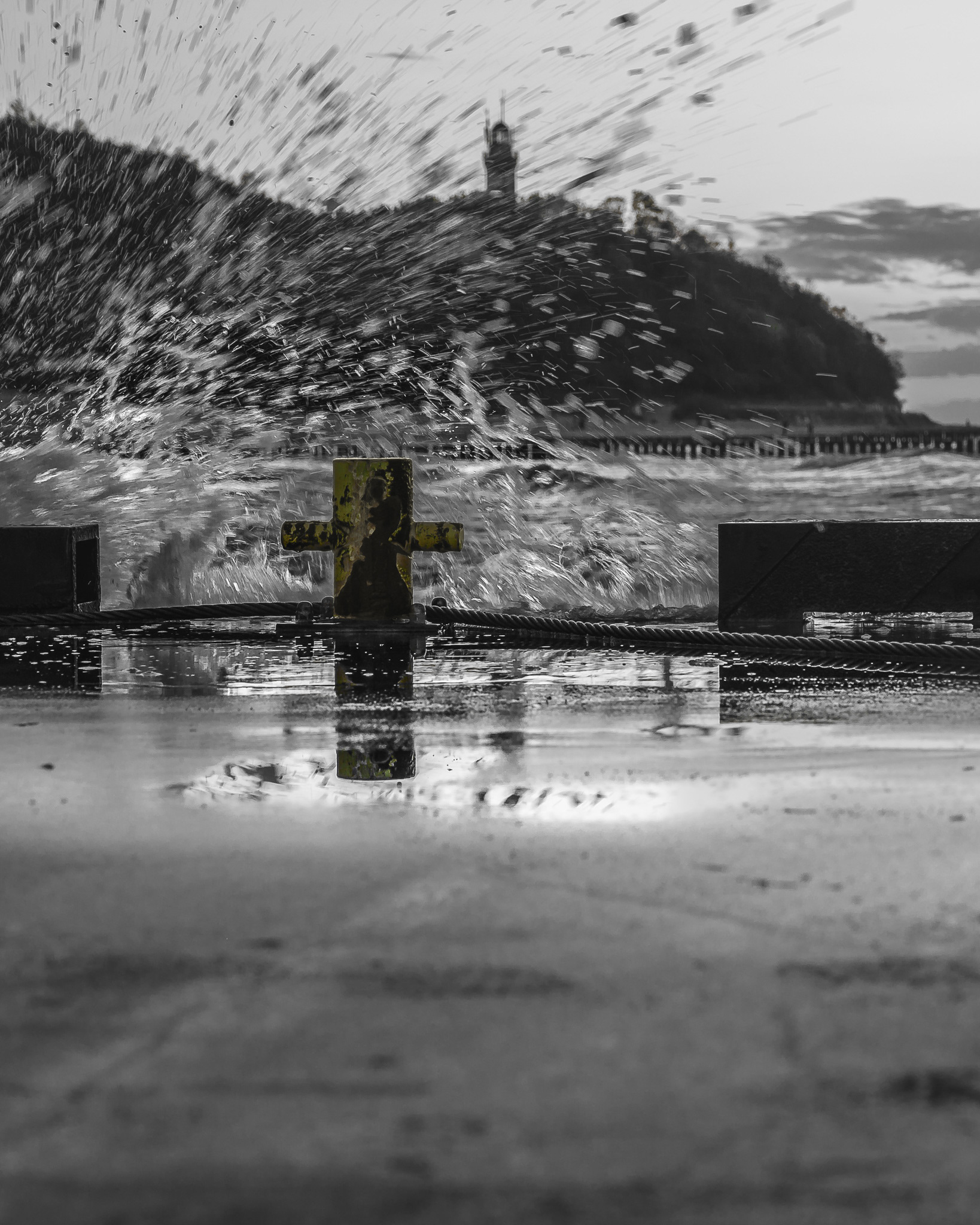
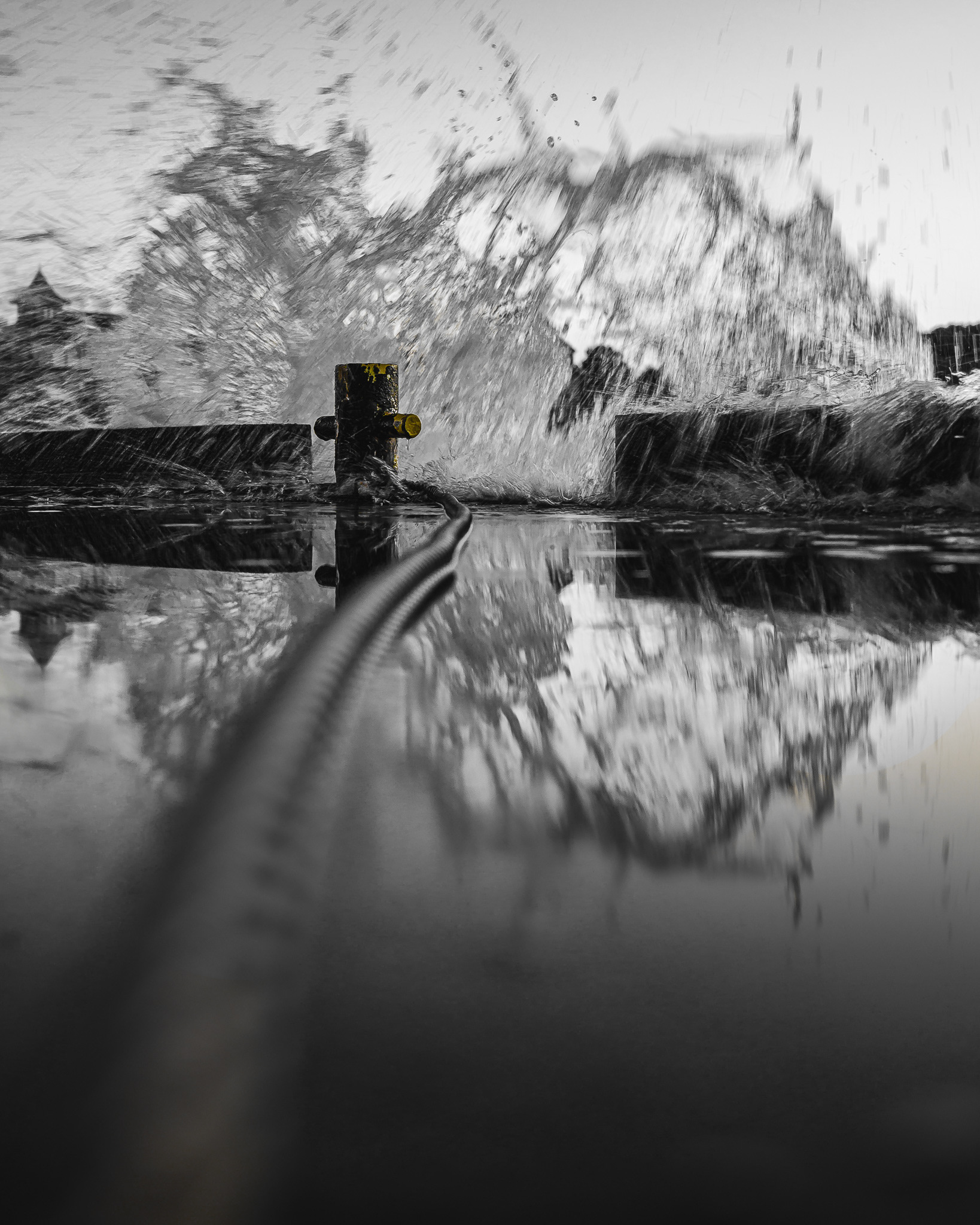
This triptych was created while photographing rough seas along the breakwater. Rather than searching for a single decisive moment, I focused on the repeated encounters between the water and the harbor architecture.
Each frame explores the same motif from a distinct perspective. I was drawn to the direction of movement, the geometry of lines, and the way the crashing waves continually reshape the scene.
In post-production, I reduced the color palette to an almost monochromatic scale, retaining only a muted yellow on select pieces of harbor infrastructure. Rather than dominating the image, this touch of color serves as a visual anchor—guiding the eye and unifying the three photographs into a cohesive whole.
The central frame anchors the triptych’s composition. It offers the clearest sense of spatial structure, while the flanking images shift focus toward pure form and expression. In those outer panels, motion-blurred water, reflections, and the hard lines of the breakwater paint a more abstract portrait of the same force.
Three frames. Three acts. One element.
Ten tryptyk powstał podczas fotografowania wzburzonego morza przy falochronie. Zamiast poszukiwać jednego decydującego momentu, skupiłem się na powtarzających się spotkaniach żywiołu z portową architekturą.
Każdy kadr przedstawia ten sam motyw z innej perspektywy. Interesował mnie kierunek ruchu, geometria linii oraz sposób, w jaki rozbijające się fale nieustannie zmieniają charakter fotografowanej sceny.
W postprodukcji ograniczyłem paletę barw niemal do monochromatycznej skali, pozostawiając jedynie stonowaną żółć wybranych elementów infrastruktury portowej. Kolor nie dominuje nad obrazem, lecz pełni rolę wizualnej kotwicy, prowadząc wzrok odbiorcy i spajając trzy fotografie w jedną całość.
Centralny kadr stanowi kompozycyjną oś tryptyku. Najwyraźniej pokazuje relacje przestrzenne i konstrukcję miejsca, podczas gdy fotografie po bokach kierują uwagę ku formie i ekspresji samego żywiołu. W skrajnych kadrach rozmyty ruchem obraz wody, odbicia i surowe linie falochronu tworzą bardziej abstrakcyjny portret tej samej siły.
Trzy kadry. Trzy akty. Jeden żywioł.

Nikon Z5, Nikkor 24-70 f/4 S